


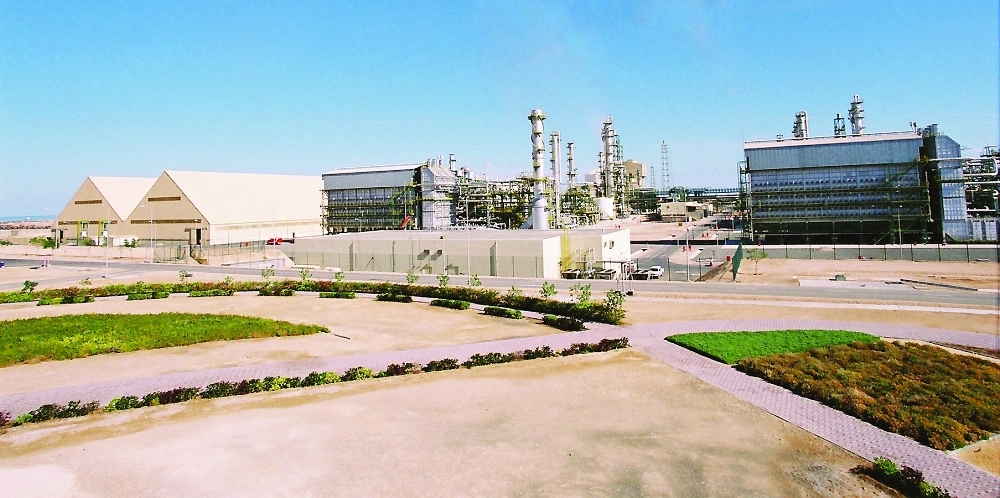





Muscat: As Oman India Fertiliser Company (OMIFCO) prepares to open its initial public offering to investors, one of the most important elements behind the company’s profitability lies outside the share offer itself: a long-term natural gas supply agreement with the Government of Oman.
The agreement, signed in September 2025 and effective from July 15, 2025, will shape OMIFCO’s cost base, competitiveness and expansion prospects over the next decade. It commits the company to a minimum gas purchase obligation estimated at around $3.9 billion over ten years, underlining the central role of feedstock pricing in the fertiliser producer’s investment case.
Natural gas is the foundation of OMIFCO’s operations. It is used to produce ammonia, which in turn supports the company’s urea output at its industrial complex in Qalhat, Sur. In 2025, the company generated revenue of RO 308.9 million, equivalent to about $802 million.
Under the new Natural Gas Supply Agreement, OMIFCO receives gas from Integrated Gas Company SAOC (IGC), a government-owned entity. The gas is transported through pipelines operated by OQ Gas Networks, which is part of the wider OQ group. The agreement runs until July 15, 2035.
It provides for an annual contract quantity of 58.765 million MMBtu, with a base gas price of $5.25 per MMBtu on a gross heating value basis. The price increases by 3 per cent annually on a compounded basis, lifting the 2026 gas price to $5.41 per MMBtu.
The contract also includes a minimum take-or-pay obligation of 92 per cent of the annual contract quantity. This means OMIFCO must pay for a substantial portion of the contracted gas volume even if market conditions weaken or production requirements change.
The new agreement replaced an earlier gas supply arrangement dating back to 2002. The higher pricing under the new deal has already affected the company’s cost structure. OMIFCO’s annual gas cost rose from RO 83.3 million in 2024 to RO 101.2 million in 2025, an increase of about 22 per cent.
Despite the increase, OMIFCO continues to benefit from a significant feedstock advantage compared with many international fertiliser producers. In markets such as India and Europe, fertiliser producers are often exposed to higher LNG-linked or market-based gas prices. This gives OMIFCO a structural cost advantage in the global urea market, particularly when gas prices remain elevated in importing regions.
India is especially important to OMIFCO’s commercial position, as it accounts for a major share of the company’s exported urea. The company’s access to pipeline gas at a relatively competitive price supports its ability to serve that market while maintaining margins.
Natural gas remains OMIFCO’s largest raw material cost by far, accounting for about 94–95 per cent of total raw material costs in recent years. This makes gas pricing the single most important cost variable for the company and a key factor for prospective investors to consider.
A notable feature of the new gas agreement is a decarbonisation-linked payment mechanism. When OMIFCO’s realised urea selling price exceeds contractually defined thresholds, part of the incremental revenue is allocated to a dedicated decarbonisation account held in escrow at Bank Muscat.
The mechanism has already been triggered twice — in the third quarter of 2025 and the first quarter of 2026 — following higher urea prices. As of March 31, 2026, OMIFCO had accrued RO 277,000, or about $719,000, payable into the account.
The arrangement means that part of the upside from high urea prices is channelled towards decarbonisation initiatives in Oman. For investors, this is an important detail because higher commodity prices may not flow entirely to shareholders.
The gas agreement is also linked to in-country value requirements. OMIFCO must maintain an Omanisation rate of at least 80 per cent, procure at least 30 per cent of raw materials from Omani manufacturers, and allocate at least 1 per cent of net-profit to corporate social responsibility initiatives.
According to the prospectus, the company has met its ICV obligations since its plants were commissioned. These conditions remain relevant because future gas allocation will be critical to OMIFCO’s expansion plans.
OMIFCO has commissioned a feasibility study for a third production train that could add about 3,500 tonnes per day of ammonia capacity and 6,212 tonnes per day of urea capacity, representing a major potential expansion of output.
The proposed project carries an estimated capital cost of about $2.9 billion, subject to a 50 per cent accuracy range. It would require an additional 2.7 million metric standard cubic metres per day of natural gas feedstock under a minimum nine-year supply arrangement.
The company has submitted a request to IGC for the additional gas allocation. However, no confirmation has been received and no final investment decision has been taken.
The feasibility study assumes a gas price of $7.1 per MMBtu for the new production train, although OMIFCO has indicated that the project’s economic and decarbonisation benefits could support discussions over a lower ICV-linked gas price. Such negotiations have not yet taken place.
This makes gas availability the central condition for OMIFCO’s next phase of growth. The company’s expansion prospects are therefore closely tied to national gas allocation priorities and Oman’s wider industrial strategy.
The Financial Services Authority approved OMIFCO’s IPO prospectus on June 11, 2026. Subscriptions are scheduled to open on June 16 and close on June 25, with shares expected to begin trading on the Muscat Stock Exchange under the symbol 'OMIF' on or around July 8.
Oman Observer is now on the WhatsApp channel. Click here


